
How GLP-1s Are Reshaping the Business of Healthcare

GLP-1s are forcing a strategic reset across U.S. healthcare
Obesity is the baseline, not the exception. 40.3% of U.S. adults have obesity and 9.4% have severe obesity — making it a foundational condition around which much of American healthcare has been structured.
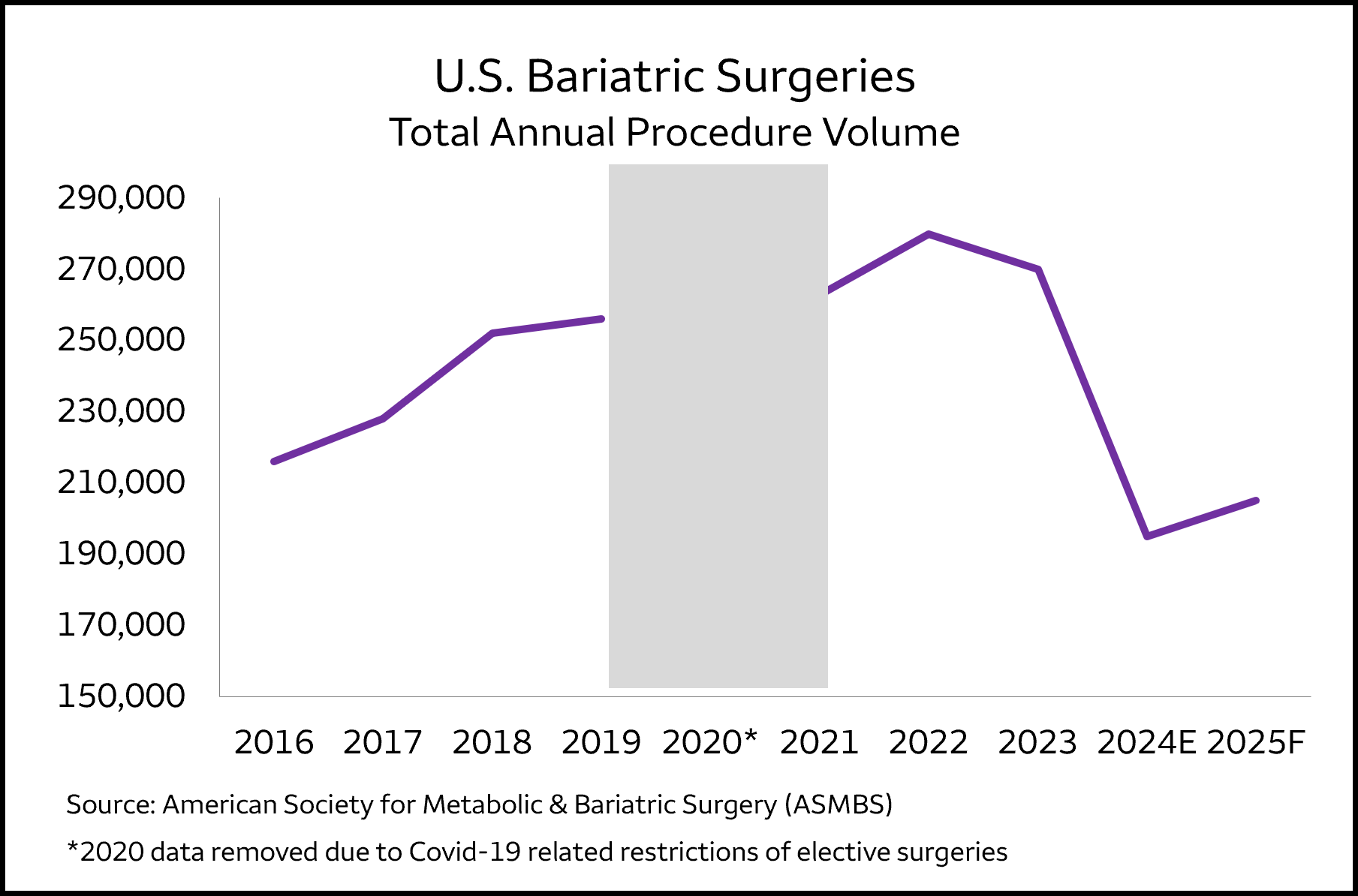
GLP-1s are disrupting one of healthcare's most entrenched revenue models. From 2022 to 2024, GLP-1 use rose more than 140%, with ripple effects across hospital service lines built around late-stage obesity treatment. As just one example, bariatric surgery volumes fell 34.1% over the same period.
The cardiovascular impact alone could reshape hospital economics. Semaglutide reduced major adverse cardiovascular events by 20% in overweight or obese adults without diabetes — meaning fewer high-margin procedures and fewer downstream complications across one of healthcare's most lucrative service lines.
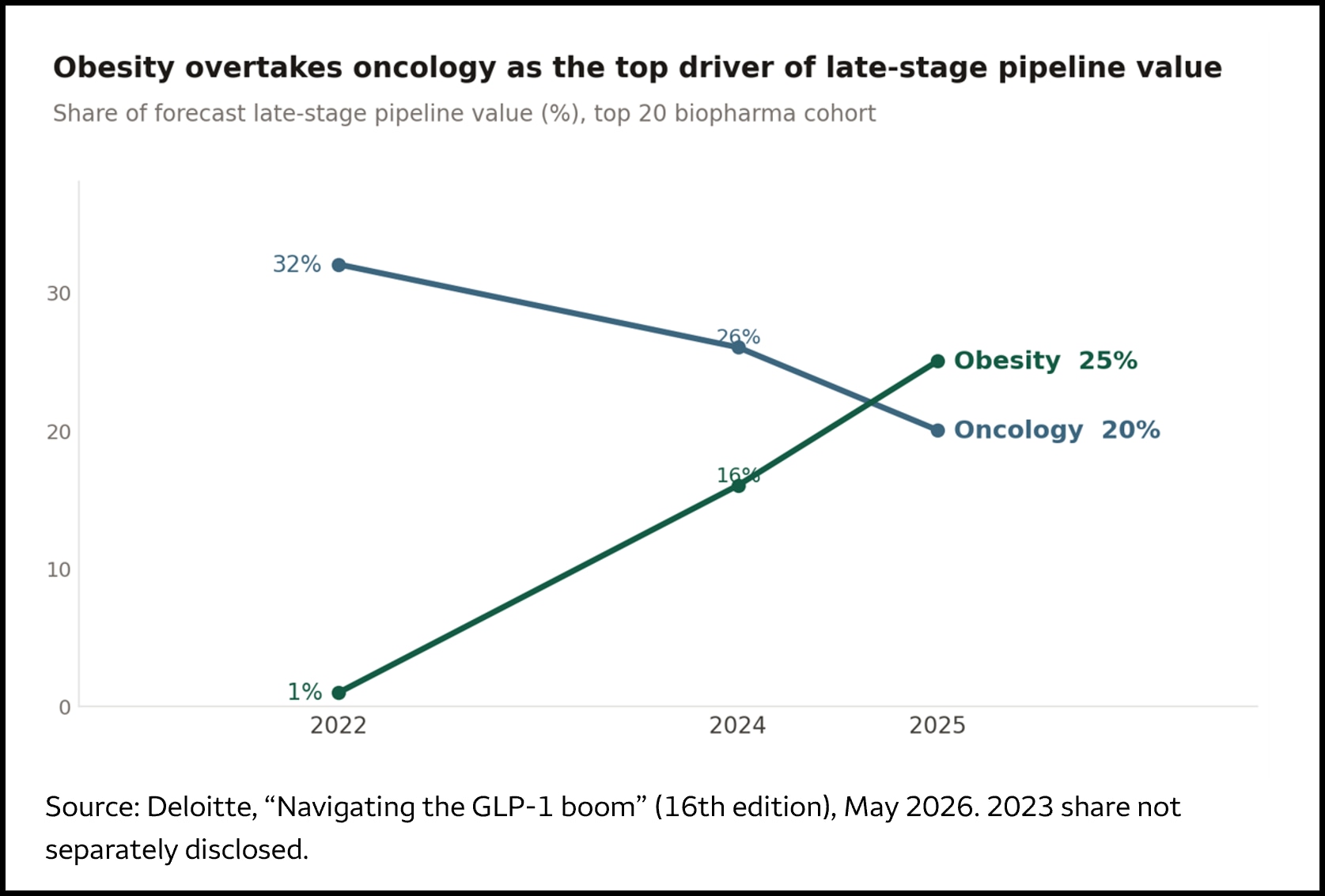
Obesity has displaced oncology as pharma's most valuable pipeline category. Obesity therapies account for ~25% of forecast late-stage pipeline value, up from just 1% in 2022, overtaking oncology's ~20% share.
The winners will be those who reposition — Healthcare organizations must reallocate toward obesity medicine, integrated cardiometabolic care, and specialty pharmacy, as Goldman Sachs projects global obesity-drug sales of ~$105 billion by 2030.
For decades, a significant portion of the U.S. healthcare system has been built around the downstream consequences of obesity. Diabetes clinics, cardiology service lines, sleep medicine, orthopedics, bariatric surgery, pharmacy, and chronic disease management have all grown inside a system where obesity was widespread, persistent, and often untreated.
The scale is not marginal. The latest CDC/NCHS data showed 40.3% of U.S. adults have obesity, and 9.4%, roughly one in ten, have severe obesity. That makes obesity not an outlier, but a baseline condition around which much of American healthcare now operates.
Rethinking Obesity: It’s bigger than individual choice
Obesity is not solely about individual behavior; federal health agencies recognize obesity as a complex, chronic disease shaped by diet, physical activity, stress, medications, genetics, and the sedentary environments in which people live and work. The question to consider is why so many of today’s default choices push a significant share of the population in the same direction.
Food is an undeniable part of that story. In a tightly controlled National Institutes of Health (NIH) inpatient trial, participants offered ultra-processed diets consumed approximately 500 more calories per day, and gained weight, relative to those provided minimally processed diets, despite meals being matched for calories, sugar, fat, fiber, and macronutrients. Federal nutrition policy is beginning to respond: the 2025–2030 Dietary Guidelines for Americans, released in January 2026, shift from nutrient-based clinical advice toward “real food,” prioritizing protein and whole, minimally processed foods while urging Americans to limit the overconsumption of highly processed foods. As Wells Fargo’s Agri-Food Institute has noted, the new guidelines are in sync with growing consumer demand for nutrient-dense, minimally processed foods, a shift already visible as health-conscious shoppers, including GLP-1 users, move toward the fresh perimeter of the store and away from highly processed center-aisle options.
From Surgery to Semaglutide: The Structural Shift in Obesity Care
Over time, the U.S. did not just become heavier, it built a healthcare economy around the consequences. Then came GLP-1s for weight management: a gamechanger that moves the management of obesity upstream, to prevention in the context of a system designed around late-stage disease. Hospitals must adapt, or risk being anchored to a model built on later-stage treatment of obesity conditions and complications that are finally becoming preventable and manageable.
One of the first pressure points is bariatric surgery. Surgery remains one of the most effective and durable interventions for severe obesity, but data suggests patient behavior is already shifting. A 2026 Journal of the American Medical Association (JAMA) surgery analysis found that metabolic bariatric surgery volumes fell 34.1% from 2022 to 2024, even as GLP-1 use rose more than 140% over the same period. Patients who once moved from diet to surgery now have a pharmaceutical off-ramp that is visible, reversible, and socially normalized.
A second area of impact is cardiology. The Semaglutide Effects on Cardiovascular Outcomes in People with Overweight or Obesity (SELECT) trial showed that semaglutide reduced major adverse cardiovascular events by 20% in overweight or obese adults without diabetes. If GLP-1s reduce cardiovascular events in high-risk populations at scale, the impact to hospitals is not only fewer procedures, it is fewer repeat admissions, complications, and downstream interventions. For service lines built on those events, that is a sizable reduction in demand.
Chronic management of obesity and its complications is the third area of impact. As acute interventions decline, care shifts toward longitudinal management, outpatient visits, medication management, side-effect monitoring, and long-term adherence support, alongside the comorbidities obesity drives, from orthopedic procedures such as knee and hip replacement to obstructive sleep apnea and metabolic (MASH) liver disease. These grow in importance even as some high-margin procedures recede.
Orthopedics offers a clear example of this complexity. Stryker, the world’s largest orthopedic device manufacturer, has argued that GLP-1s are a net neutral to slightly positive: by helping obese patients slim down to qualify for surgery, the drugs may unlock previously ineligible candidates and expand the patient pool. A counterweight is the possibility that for patients still on GLP-1 therapy who become more active after weight loss, joint wear accelerates, potentially pulling forward arthroplasty demand. The net effect on procedure volumes will likely depend on adoption rates, drug persistence, and how surgeons update BMI-based eligibility thresholds, questions the data has not yet resolved. For orthopedic device makers and hospital service lines, the opportunity lies with the obesity-arthroplasty pipeline being restructured, not simply compressed.
GLP-1s, while improving population health, will challenge revenue models built around late-stage treatment of the disease. A 2024 JAMA Network Open analysis estimated that weight loss among overweight or obese adults is associated with lower healthcare spending, with the largest reductions at higher levels of weight loss.
Those downstream savings, however, sit against a steep upfront bill that payers are already feeling. The Peterson-KFF Health System Tracker reports that 64% of large firms say covering GLP-1s for weight loss has moderately or significantly increased their prescription-drug spending, and gross Medicare Part D spending on GLP-1s reached $27.5 billion in 2024, a five-fold increase since 2019, even before coverage for obesity is broadly authorized. For hospitals and health plans, the near-term cost pressure is real even if long-run utilization of acute services declines.
The drug pipeline is being rewritten, too
The shift is just as visible upstream, in what pharmaceutical companies choose to develop. In its annual analysis of pharmaceutical R&D returns, Deloitte found that, for the first time in 16 years of analysis, obesity has displaced oncology as the largest contributor to late-stage pipeline value. Obesity assets, driven almost exclusively by GLP-1 and GLP-1/GIP molecules, now account for roughly 25% of forecast late-stage pipeline value, up from just 1% in 2022. Oncology, the perennial leader, has slipped to about 20%.
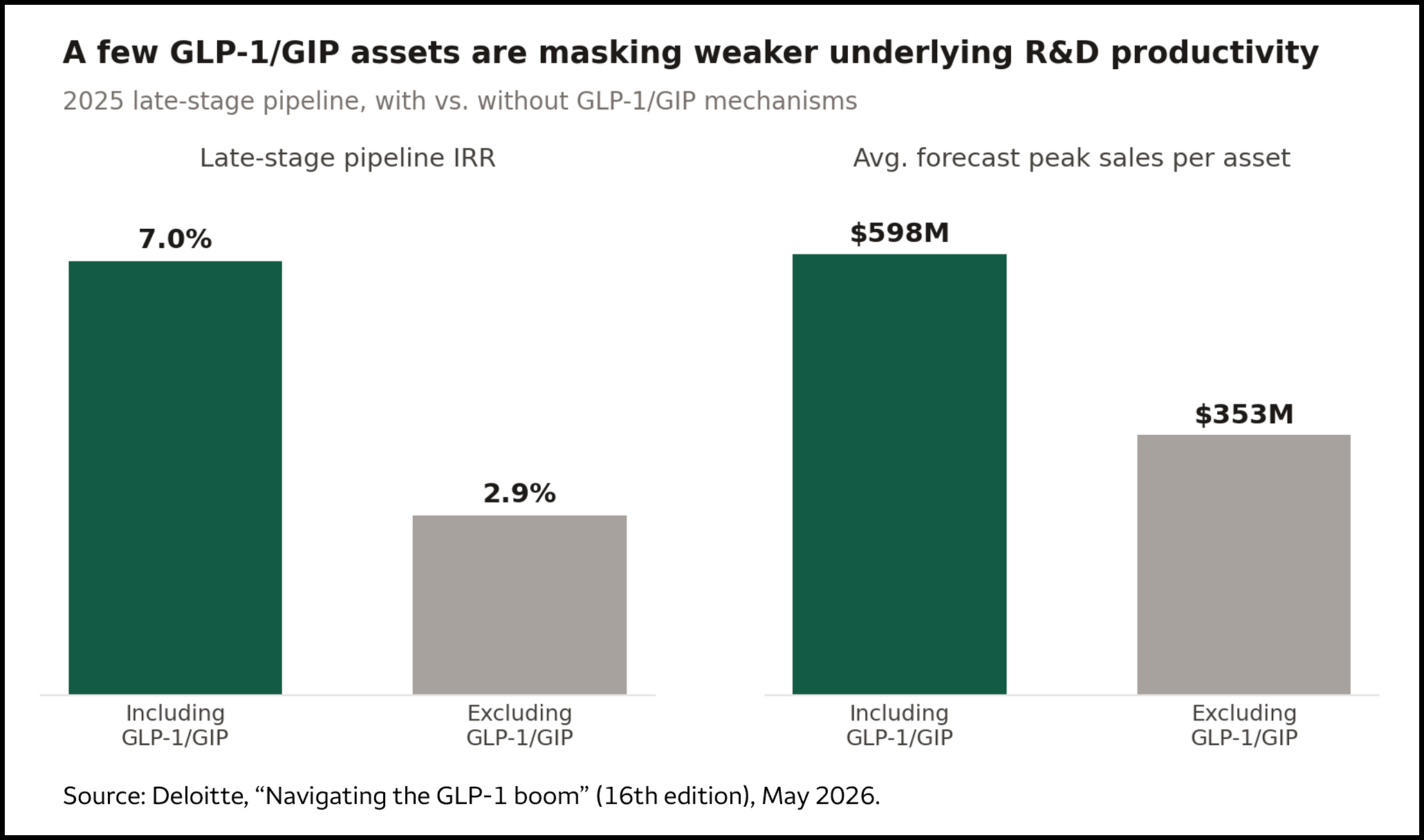
The same forces are concentrating value into a handful of programs. The number of forecast mega-blockbusters, assets projected to exceed $10 billion in peak sales, rose from six to eight in a single year, and now account for roughly 70% of total risk-adjusted peak sales. For an industry, and a healthcare system, increasingly leaning on one drug class, a safety signal, pricing shock, or supply constraint in the GLP-1/GIP space would reverberate widely.
The great reshaping of healthcare
Hospital responses will likely vary, from stepping up cost control, service-line consolidation, and efficiencies, to moving upstream by building resources around obesity medicine, specialty pharmacy, and integrated cardiometabolic care.
For investors, the implication is not that healthcare revenues decline, it is that profit centers move. Pharmaceutical companies with leading obesity franchises gain recurring revenue, while MedTech may face category-specific pressure where devices are tied to obesity-related surgical procedures.
The size of the prize is large but increasingly debated: Goldman Sachs now estimates global obesity-drug sales of roughly $105 billion by 2030, trimmed from an earlier $130 billion forecast, as competition and pricing pressure build. And much of the next leg depends on public payers: the Congressional Budget Office estimates that authorizing Medicare to cover anti-obesity medications would increase federal spending by about $35 billion between 2026 and 2034, with the near-term cost per user (roughly $5,600 in 2026) far exceeding the offsetting federal savings from improved health (about $50 per user that year). The clinical benefits of weight loss would take several years to fully materialize as lower health care utilization but would still not fully offset the cost per user. The economics, in other words, hinge on price as much as on volume.
Conclusion
The likely healthcare industry winners will not be those who defend the old model, but those who reposition ahead of it, reallocating capital and talent toward obesity medicine, integrated cardiometabolic care, and specialty pharmacy, while right-sizing the service lines GLP-1s will erode and absorbing the near-term cost of the drugs themselves. The strategic question is no longer whether obesity remains prevalent and profitable, but how quickly the ecosystem can rebuild its economics around prevention that finally works.
RO-5811875
LRC-0826
