Online safety and fraud protection for individuals

Your security journey starts here
Security best practices for individuals

Review guide >

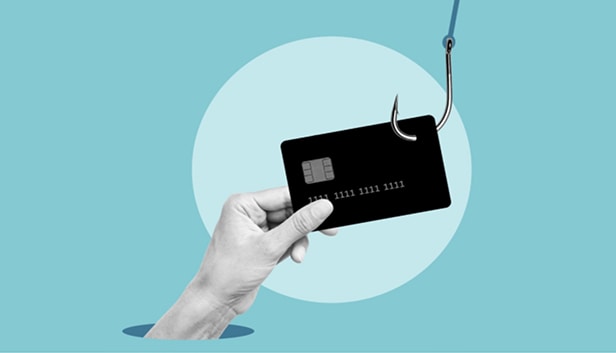
Common bank and money scams

Learn more >

Protection after a fraud or security incident

Stay informed >

Report fraud or suspicious activity

Report suspicious activity >

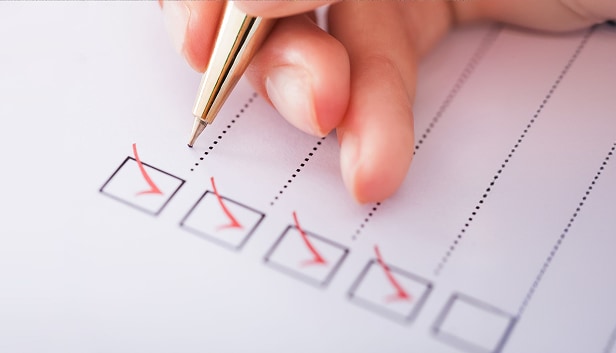
Security best practices for individuals

  • Create a unique password or passphrase: Create a long, unique, complex passphrase for every account, with at least 12 characters. Make sure to include a mix of uppercase and lowercase letters, numbers, and symbols.

    • Remember: Never share your passwords or write them down. While some browsers offer to save your username and password (AutoSave or AutoFill), we recommend disabling this feature for Wells Fargo Online® and the Wells Fargo Mobile® app.
  • Set up a passkey: As an alternative to a password, you can set up a passkey. Visit the ‘Security Center’ in the Wells Fargo Mobile® app, or if you’re logged in on a computer, go to ‘Safety and Support’ for instructions. For more information, see the Wells Fargo Passkey questions page.
  • Enable biometric sign-on: Biometric sign-on uses unique individual characteristics (like fingerprints or facial recognition) to verify your identity. For more information on how to set up this feature for your Wells Fargo accounts, visit Biometric authentication questions.

    • Remember: Wells Fargo does not store your biometric information.
  • Enable voice verification: Voice verification allows Wells Fargo to identify you by your voice when you call customer service. To activate voice verification for your account, call 1-800-869-3557 and when prompted with an offer to enroll for voice authentication follow the steps to complete the process.
  • Enable multi-factor authentication (MFA): MFA adds an extra step to verify your identity, making it harder for criminals to access your account, even if your password is compromised. Learn more about how you can activate two-step verification at sign-on for your Wells Fargo accounts.
  • Sign-up for alerts: Set up online banking account alerts  to notify you when anyone makes a purchase or withdrawal so that you can contact Wells Fargo immediately if something doesn’t look right.

  • Sign-out of your account after use: Wells Fargo will automatically sign you out of your online or mobile banking session after a period of inactivity to help protect your information. For added security, we recommend always signing out of your account and closing your browser as soon as you’re finished banking.
  • Enroll in paperless statements: Sign-up for online billing and financial statements to help reduce the risk of identity theft from stolen paper documents.
  • Get credit report savvy: Review your credit report at least once a year to look for unauthorized accounts that are opened in your name.

    • Receive a free credit report from each of the three major credit bureaus at www.annualcreditreport.com. If you see an issue with your credit report, you can request a security freeze with the reporting companies until you resolve the issue.
    • Monitor your credit and set up credit monitoring alerts with Credit Close-Up®.
  • Use a digital wallet: Digital wallets replace your actual card number with a unique digital card number. This means that when you are making purchases in stores, in apps, or online, businesses cannot see or store your full card number.
  • Update your software: Install automatic updates for your operating system, applications, and browsers. These updates are often critical to security patches that fix vulnerabilities.
  • Activate automatic locks: Set your devices to automatically lock when not in use and use a passcode or biometric to unlock your device. If you use a passcode, do not share it with anyone.
  • Use anti-virus and spyware protection software: This type of software can help protect your devices from malware that can compromise your personal or financial information. For the strongest protection, install reputable security software on all devices and ensure it's set to update automatically.
  • Check security settings: Double-check your security settings and permissions. Be selective about which apps can access your device’s camera, microphone, contacts, and other sensitive info.
  • Secure home routers: Secure your home router with a strong password to help protect devices on your network from unauthorized access. Consider a router with Wi-Fi Protected Access (WPA3) encryption.
  • Physically secure your devices: Don’t forget that physical device security is the first line of defense for your digital life. A lost or stolen device can expose all of your data, so it is important that you always keep your devices in safe locations.

Remember:

  • Don’t try to alter or “jail break” your device in any way. This might make it more vulnerable to malware.
  • If you are disposing a device, make sure to first restore the device to factory settings. Don’t just manually delete contacts and other personal content.
  • Don’t grant remote access to your device or download unknown remote-support apps, as they can expose your data or cause data loss.
  • Pause and think before you click or scan: Before clicking any link or scanning any QR code, pause and evaluate its legitimacy. Hover over links to see their true destination and be wary of QR codes from unknown or suspicious sources.
  • Pause and think before you download: Only download applications from trusted sources. Read reviews, ratings, and privacy information before downloading any new apps onto your devices and delete apps that you are no longer using.
  • Pause and think before verifying urgent requests (especially financial): Wells Fargo representatives will never initiate contact with you requesting sensitive information like your account password or Social Security number, or pressure you into taking some sort of urgent action. If you receive an urgent request for money, sensitive information, or a change in payment instructions by email, text, or a call, do not engage.

    • Separately verify the authenticity of the source by calling Wells Fargo directly using the number on the back of your card.
    • Don’t respond to the number provided in the suspicious message.
  • Pause and think before sharing information: Understanding data sensitivity is key to helping you navigate when, where, and how to share different types of information.

    • Don’t provide your personal or financial information to anyone unless you initiate the call or other communication.
    • Never send personal or financial information through email or text unless you use secure transmission.
    • Shred documents that contain sensitive information before discarding.
    • Be mindful of what you share on social media and consider limiting your privacy settings to ’Friends and Family’ to reduce the risk of bad actors monitoring your activity or gathering information about you.
  • Pause and think before you connect:

    • Wi-Fi: Avoid accessing sensitive info, like financial accounts, or conducting business on unsecured public Wi-Fi networks. If you must use it, always connect through a Virtual Private Network (VPN). Using a VPN helps to protect personal browsing and data from cyber criminals.
    • Charging Stations: Avoid plugging your devices into public USB charging stations. USB ports transfer both power and data, so an attacker could use a compromised port to access your data from, install malware onto, or take control of your device
To learn more, visit the Wells Fargo Avoid common threats and scams page.
  • Report fraud or suspicious activity: Visit the Wells Fargo Report fraud or suspicious activity page for specific steps you should take to immediately report an incident or concern to Wells Fargo.
  • Report a lost or stolen card: Immediately report a lost or stolen ATM, debit card, credit card, check or account number. If you receive a replacement card, cut up or shred and discard the old card, including the chip. Wells Fargo will never ask you to send back your old card to “recycle it” or “keep it safe,” and will not appear at your home to retrieve your card. If you misplace your card, sign onto your Wells Fargo account to temporarily turn it off. You can turn it back on when you find your card.

Stay ahead of the latest threats and scams

Avoid common threats and scams

Explore resources

Safety tips to avoid AI scams

Stay informed

Identify and avoid bank imposter scams

Get details

Tips to avoid scams targeting elder adults

Learn more

How to spot tax-related scams and fraud

See more info

Money and account safety tips for traveling

Review tips

How to avoid IT and tech support scams

Explore recommendations

Avoid online payment and wire transfer scams and fraud

View details

Sign-up may be required. Availability may be affected by your mobile carrier's coverage area. Your mobile carrier's message and data rates may apply.

You must be a Wells Fargo account holder of an eligible Wells Fargo consumer account with a FICO® Score available, and enrolled in Wells Fargo Online®. Eligible Wells Fargo consumer accounts include deposit, loan, and credit accounts, but other consumer accounts may also be eligible. Contact Wells Fargo for details. Availability may be affected by your mobile carrier's coverage area. Your mobile carrier's message and data rates may apply. 

Please note that the score provided under this service is for educational purposes and may not be the score used by Wells Fargo to make credit decisions. Wells Fargo looks at many factors to determine your credit options; therefore, a specific FICO® Score or Wells Fargo credit rating does not guarantee a specific loan rate, approval of a loan, or an upgrade on a credit card.

Wells Fargo and Fair Isaac are not credit repair organizations as defined under federal and state law, including the Credit Repair Organizations Act. Wells Fargo and Fair Isaac don’t provide credit repair services or advice or assistance with rebuilding or improving your credit record, credit history, or credit rating.

Digital wallets may not be available on all devices. Your mobile carrier's message and data rates may apply.

DT1-05202027-12-8972348-1.1